
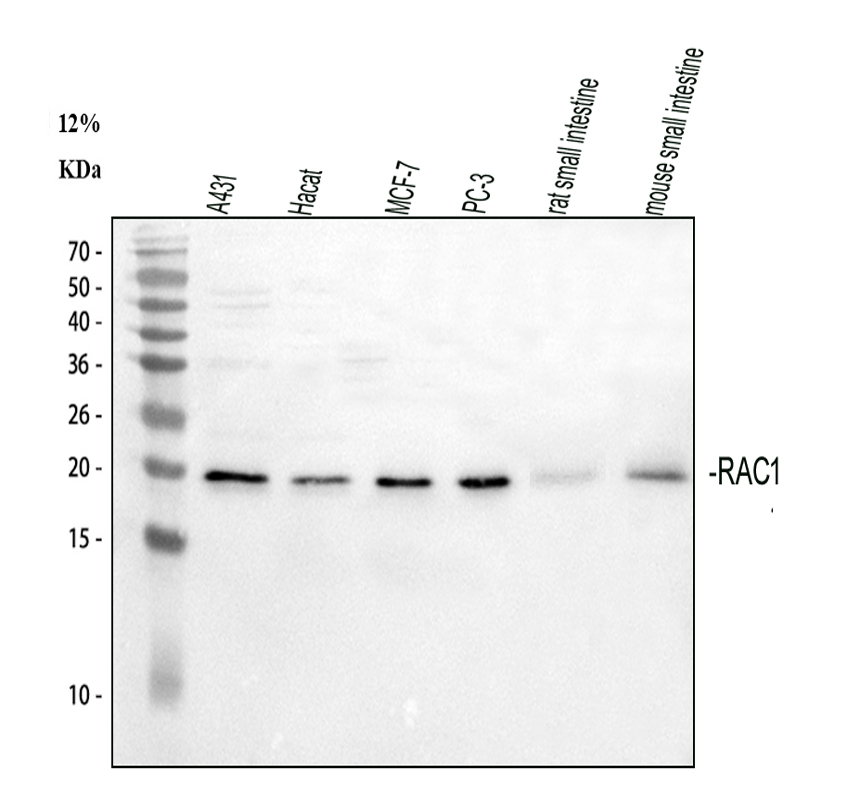
Western blot analysis of RAC1 using anti-RAC1 antibody (PB0425). The sample well of each lane was loaded with 30 ug of sample under reducing conditions.
Lane 1: human A431 whole cell lysates,
Lane 2: human Hacat whole cell lysates,
Lane 3: human MCF-7 whole cell lysates,
Lane 4: human PC-3 whole cell lysates,
Lane 5: rat small intestine tissue lysates,
Lane 6: mouse small intestine tissue lysates.
After electrophoresis, proteins were transferred to a membrane. Then the membrane was incubated with rabbit anti-RAC1 antigen affinity purified polyclonal antibody (PB0425) at a dilution of 1:1000 and probed with a goat anti-rabbit IgG-HRP secondary antibody (Catalog # BA1054). The signal is developed using ECL Plus Western Blotting Substrate (Catalog # AR1197). A specific band was detected for RAC1 at approximately 21 kDa. The expected band size for RAC1 is at 21 kDa.

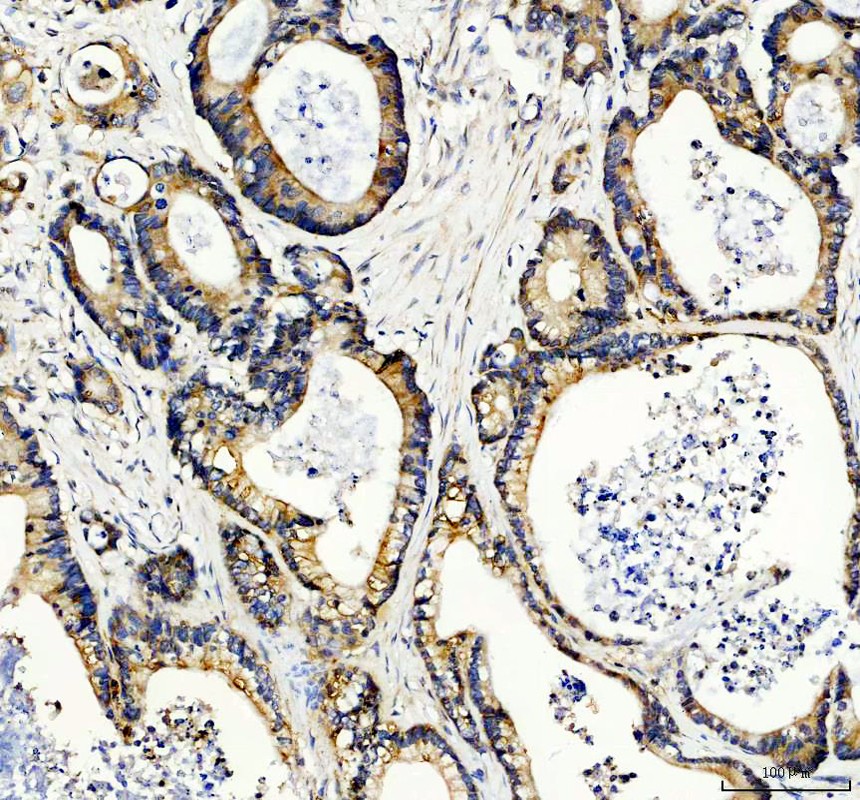
IHC analysis of RAC1 using anti-RAC1 antibody (PB0425).
RAC1 was detected in a paraffin-embedded section of human colon cancer tissue. The tissue section was incubated with rabbit anti-RAC1 Antibody (PB0425) at a dilution of 1:200 and developed using HRP Conjugated Rabbit IgG Super Vision Assay Kit (Catalog # SV0002) with DAB (Catalog # AR1027) as the chromogen.
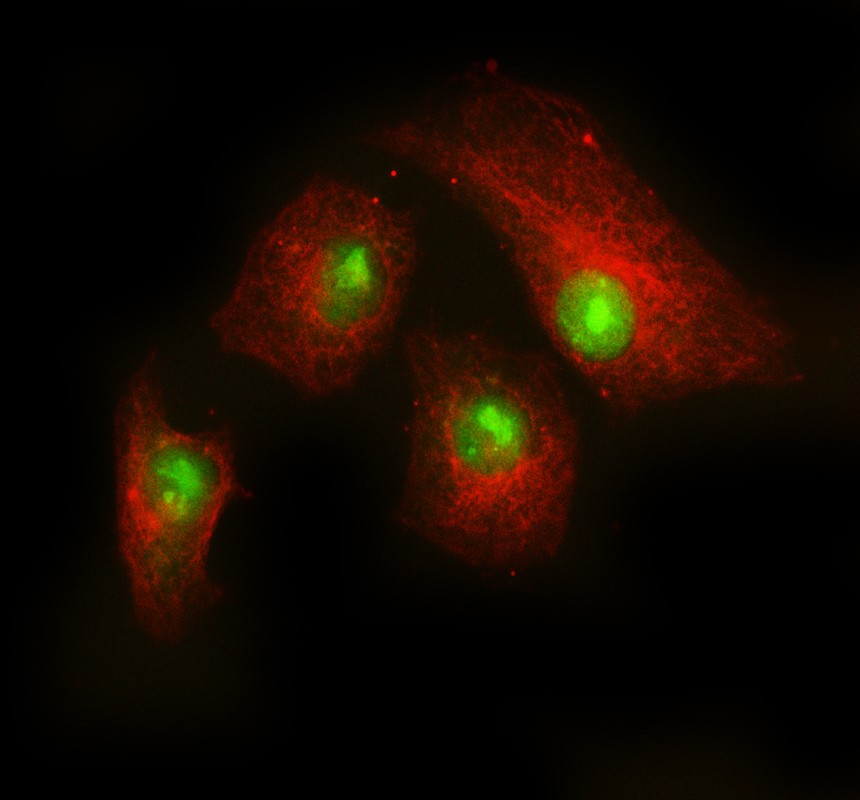
ICC/IF analysis of RAC1 using anti-RAC1 antibody (PB0425) and anti-Beta Tubulin antibody (M01857-3).
RAC1 was detected in an immunocytochemical section of A549 cells. The section was incubated with rabbit anti-RAC1 Antibody (PB0425) at a dilution of 1:100. Fluoro488-conjugated Anti-rabbit IgG Secondary Antibody (green)(Catalog#BA1127) and Fluoro594-conjugated Anti-mouse IgG Secondary Antibody (red)(Catalog#BA1141) were used as secondary antibody.
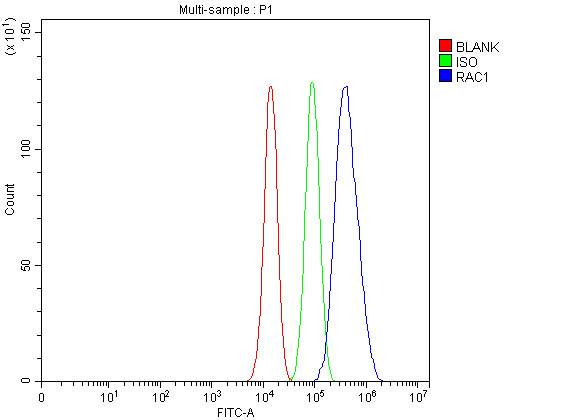
Flow Cytometry analysis of U87 cells using anti-RAC1 antibody (PB0425).
Overlay histogram showing U87 cells stained with PB0425 (Blue line). To facilitate intracellular staining, cells were fixed with 4% paraformaldehyde and permeabilized with permeabilization buffer. The cells were blocked with 10% normal goat serum. And then incubated with rabbit anti-RAC1 Antibody (PB0425) at 1:100 dilution for 30 min at 20°C. Fluoro488 conjugated goat anti-rabbit IgG (BA1127) was used as secondary antibody at 1:100 dilution for 30 minutes at 20°C. Isotype control antibody (Green line) was rabbit IgG at 1:100 dilution used under the same conditions. Unlabelled sample without incubation with primary antibody and secondary antibody (Red line) was used as a blank control.
| Western blot (WB): | 1:500-2000 |
| Immunohistochemistry (IHC): | 1:50-400 |
| Immunocytochemistry/Immunofluorescence (ICC/IF): | 1:50-400 |
| Flow Cytometry (Fixed): | 1:50-200 |
| (Boiling the paraffin sections in 10mM citrate buffer,pH6.0,or PH8.0 EDTA repair liquid for 20 mins is required for the staining of formalin/paraffin sections.) Optimal working dilutions must be determined by end user. | |
Western blot analysis of RAC1 using anti-RAC1 antibody (PB0425). The sample well of each lane was loaded with 30 ug of sample under reducing conditions.
Lane 1: human A431 whole cell lysates,
Lane 2: human Hacat whole cell lysates,
Lane 3: human MCF-7 whole cell lysates,
Lane 4: human PC-3 whole cell lysates,
Lane 5: rat small intestine tissue lysates,
Lane 6: mouse small intestine tissue lysates.
After electrophoresis, proteins were transferred to a membrane. Then the membrane was incubated with rabbit anti-RAC1 antigen affinity purified polyclonal antibody (PB0425) at a dilution of 1:1000 and probed with a goat anti-rabbit IgG-HRP secondary antibody (Catalog # BA1054). The signal is developed using ECL Plus Western Blotting Substrate (Catalog # AR1197). A specific band was detected for RAC1 at approximately 21 kDa. The expected band size for RAC1 is at 21 kDa.
IHC analysis of RAC1 using anti-RAC1 antibody (PB0425).
RAC1 was detected in a paraffin-embedded section of human colon cancer tissue. The tissue section was incubated with rabbit anti-RAC1 Antibody (PB0425) at a dilution of 1:200 and developed using HRP Conjugated Rabbit IgG Super Vision Assay Kit (Catalog # SV0002) with DAB (Catalog # AR1027) as the chromogen.
ICC/IF analysis of RAC1 using anti-RAC1 antibody (PB0425) and anti-Beta Tubulin antibody (M01857-3).
RAC1 was detected in an immunocytochemical section of A549 cells. The section was incubated with rabbit anti-RAC1 Antibody (PB0425) at a dilution of 1:100. Fluoro488-conjugated Anti-rabbit IgG Secondary Antibody (green)(Catalog#BA1127) and Fluoro594-conjugated Anti-mouse IgG Secondary Antibody (red)(Catalog#BA1141) were used as secondary antibody.
Flow Cytometry analysis of U87 cells using anti-RAC1 antibody (PB0425).
Overlay histogram showing U87 cells stained with PB0425 (Blue line). To facilitate intracellular staining, cells were fixed with 4% paraformaldehyde and permeabilized with permeabilization buffer. The cells were blocked with 10% normal goat serum. And then incubated with rabbit anti-RAC1 Antibody (PB0425) at 1:100 dilution for 30 min at 20°C. Fluoro488 conjugated goat anti-rabbit IgG (BA1127) was used as secondary antibody at 1:100 dilution for 30 minutes at 20°C. Isotype control antibody (Green line) was rabbit IgG at 1:100 dilution used under the same conditions. Unlabelled sample without incubation with primary antibody and secondary antibody (Red line) was used as a blank control.
Western blot analysis of RAC1 using anti-RAC1 antibody (PB0425). The sample well of each lane was loaded with 30 ug of sample under reducing conditions.
Lane 1: human A431 whole cell lysates,
Lane 2: human Hacat whole cell lysates,
Lane 3: human MCF-7 whole cell lysates,
Lane 4: human PC-3 whole cell lysates,
Lane 5: rat small intestine tissue lysates,
Lane 6: mouse small intestine tissue lysates.
After electrophoresis, proteins were transferred to a membrane. Then the membrane was incubated with rabbit anti-RAC1 antigen affinity purified polyclonal antibody (PB0425) at a dilution of 1:1000 and probed with a goat anti-rabbit IgG-HRP secondary antibody (Catalog # BA1054). The signal is developed using ECL Plus Western Blotting Substrate (Catalog # AR1197). A specific band was detected for RAC1 at approximately 21 kDa. The expected band size for RAC1 is at 21 kDa.
IHC analysis of RAC1 using anti-RAC1 antibody (PB0425).
RAC1 was detected in a paraffin-embedded section of human colon cancer tissue. The tissue section was incubated with rabbit anti-RAC1 Antibody (PB0425) at a dilution of 1:200 and developed using HRP Conjugated Rabbit IgG Super Vision Assay Kit (Catalog # SV0002) with DAB (Catalog # AR1027) as the chromogen.
ICC/IF analysis of RAC1 using anti-RAC1 antibody (PB0425) and anti-Beta Tubulin antibody (M01857-3).
RAC1 was detected in an immunocytochemical section of A549 cells. The section was incubated with rabbit anti-RAC1 Antibody (PB0425) at a dilution of 1:100. Fluoro488-conjugated Anti-rabbit IgG Secondary Antibody (green)(Catalog#BA1127) and Fluoro594-conjugated Anti-mouse IgG Secondary Antibody (red)(Catalog#BA1141) were used as secondary antibody.
Flow Cytometry analysis of U87 cells using anti-RAC1 antibody (PB0425).
Overlay histogram showing U87 cells stained with PB0425 (Blue line). To facilitate intracellular staining, cells were fixed with 4% paraformaldehyde and permeabilized with permeabilization buffer. The cells were blocked with 10% normal goat serum. And then incubated with rabbit anti-RAC1 Antibody (PB0425) at 1:100 dilution for 30 min at 20°C. Fluoro488 conjugated goat anti-rabbit IgG (BA1127) was used as secondary antibody at 1:100 dilution for 30 minutes at 20°C. Isotype control antibody (Green line) was rabbit IgG at 1:100 dilution used under the same conditions. Unlabelled sample without incubation with primary antibody and secondary antibody (Red line) was used as a blank control.
 联系我们
联系我们027-67845390
 关注我们
关注我们
本司产品仅用于科研,不用于临床诊断和治疗
联系方式:027-67845390/1/2 技术支持:武汉丰网
© 1993-2025 Boster Biological Technology co.Itd E-mail:boster@boster.com
鄂ICP备05005548号-2
 鄂公网安备 42018502007312号

 积分商城
积分商城  购物车
购物车  登录/注册
登录/注册  您当前的位置:
 说明书
说明书 一键复制产品信息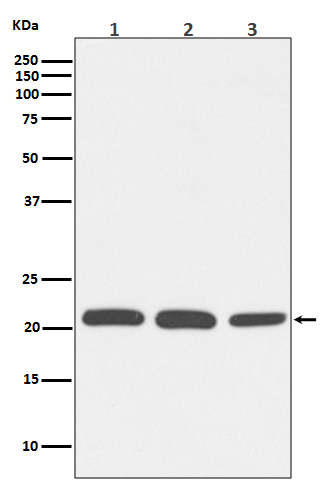
 成功添加到购物车
 微信客服
微信客服


 微信扫一扫立即咨询
